New Age Imports
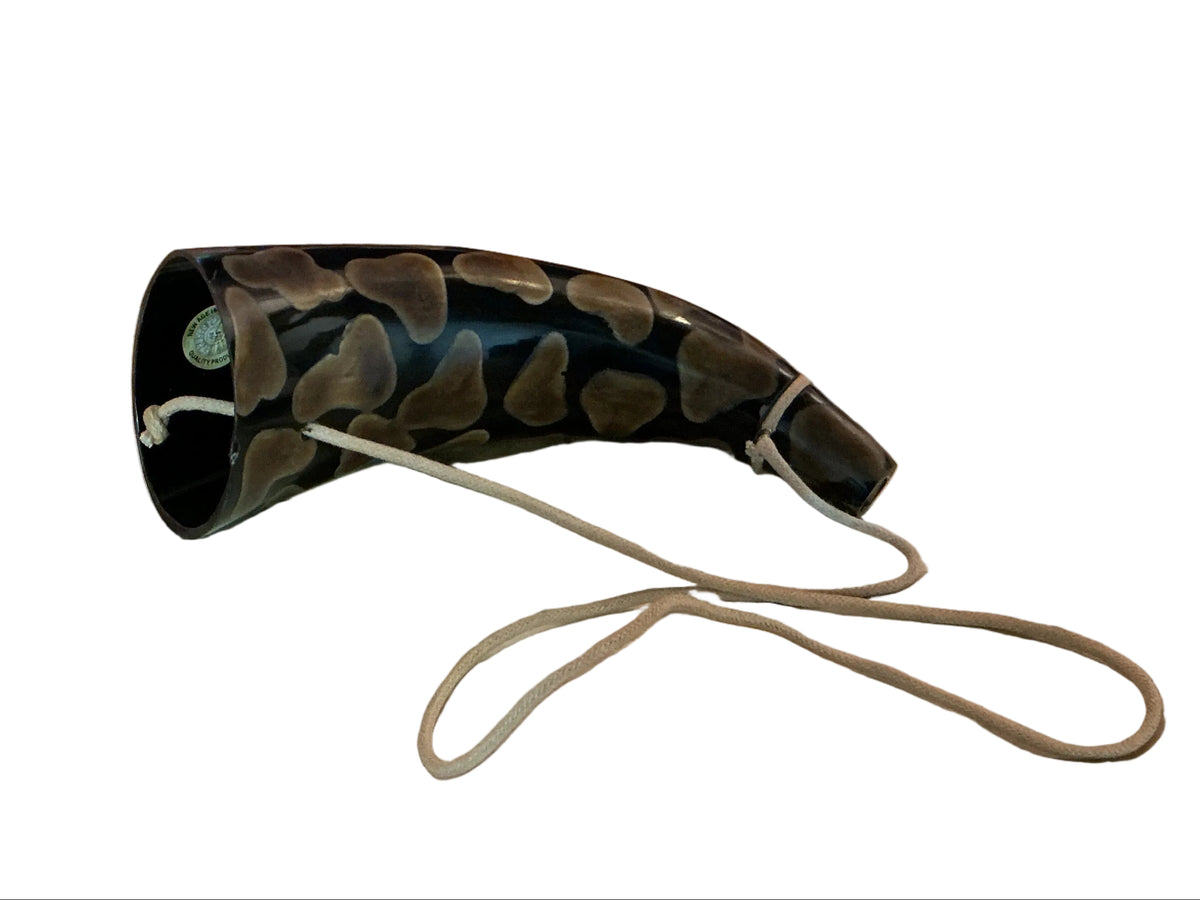
Spotted Viking Blowing Horn With Strap
Spotted Viking Blowing Horn With Strap
Couldn't load pickup availability
Viking blowing horns, also known as horn bugles or signal horns, were used during the Viking and Medieval periods primarily for communication and warning. They allowed people to signal their presence during hunting, alert others of approaching visitors, or indicate that they were not engaged in criminal activity. Historical records, such as the seventh-century law code of King Wihtred of Kent, even mandated that strangers blow a horn to avoid being mistaken for thieves.
These horns are typically handmade from a single piece of cow or ox horn. Unlike reed instruments, they are played by blowing with pursed lips, similar to a trumpet, producing a deep, resonant sound. The size of the horn affects the pitch: larger horns produce deeper tones. Some variations, like the Viking lur, are made from wood, such as willow.
In Norse mythology, the Gjallarhorn is a legendary horn owned by Heimdall, which will be blown to signal the onset of Ragnarok, awakening the gods. This highlights the horn's symbolic importance in Viking culture beyond practical communication
Share